 (941) 924-6199
 6503 Gateway Ave., Gulf Gate,
Sarasota, FL 34231
6503 Gateway Ave., Gulf Gate,
Sarasota, FL 34231


Wheel Alignment in Sarasota: What Florida Roads Are Doing to Your Tires (And How to Know When You Need It
Wheel alignment in Sarasota degrades faster than manufacturer service intervals suggest because local road conditions, construction transitions, causeway approaches, pavement patching, and Gulf Gate parking lots, deliver the kind of low-speed impacts and surface variation that shift alignment angles incrementally with every drive. By the time a driver notices a pull or uneven tire wear, the misalignment has often been compressing tire life for thousands of miles already.
What Sarasota Roads Are Actually Doing to Your Alignment
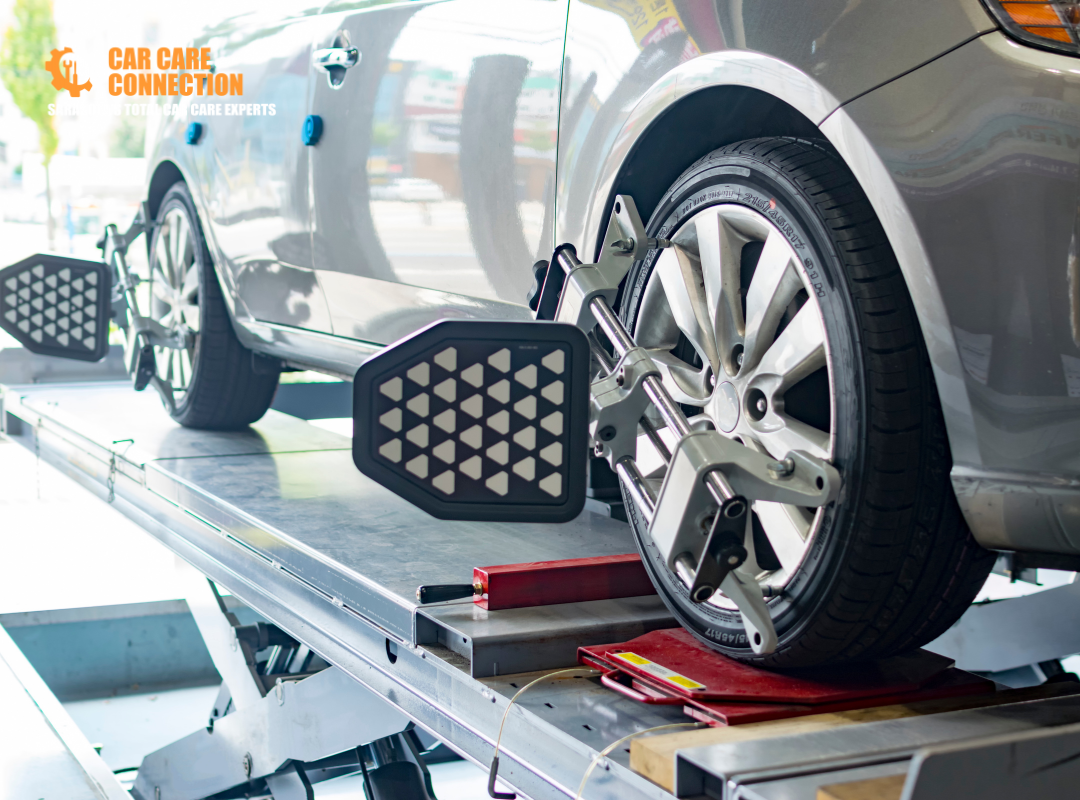
Generic alignment content tells you that potholes and curb strikes knock alignment out of spec. That is true, but it understates what local driving conditions look like in practice.
US-41 through South Sarasota runs through active and recently completed construction zones where pavement height transitions, the ridge between old and new asphalt, subject front suspension components to repetitive impact loads at highway speed. Stickney Point Road to Siesta Key involves a causeway approach with bridge expansion joints that create abrupt vertical movement through the suspension at speed. Gulf Gate’s commercial parking areas require tight turning movements and frequent curb proximity that produce lateral suspension stress even when drivers do not make direct contact.
None of these individually constitutes a dramatic alignment event. Collectively, they produce exactly what we see in vehicles driven in this area: gradual drift in toe and camber angles that accumulates over a driving season and shows up as inner or outer edge tire wear that the driver attributes to tire quality rather than alignment.
The standard recommendation to check alignment annually or after a significant impact is reasonable for temperate climates with stable road surfaces. For South Sarasota driving patterns, alignment should be checked any time you notice a change in straight-line tracking, after any suspension work, and as a routine part of tire rotation service.
Camber, Caster, and Toe: What Each Angle Does and What Happens When It Drifts
Three primary angles define wheel alignment. Understanding what each one does is the difference between recognizing a symptom and guessing at a cause.
Toe describes whether the fronts of the tires point inward (toe-in) or outward (toe-out) relative to the vehicle centerline when viewed from above. It is the alignment angle most sensitive to road impacts and the one most directly responsible for tire wear. Even a small deviation from specification, a quarter of a degree in either direction, causes the tire to scrub laterally with every rotation. This lateral scrubbing generates heat and abrades the tread surface in a feathered or sawtooth pattern across the inner or outer edge. The tire does not look obviously worn from the side, which is why toe misalignment often goes undetected until significant tread has been lost.
Camber describes the vertical tilt of the wheel when viewed from the front. Positive camber means the top of the wheel leans outward, negative means it leans inward. Camber is set at the factory to optimize contact patch geometry for the vehicle’s suspension design and load characteristics. When camber drifts out of spec due to worn ball joints, bent control arms, or suspension geometry changes after a significant impact, the result is one-sided tread wear, typically on the inner edge for excessive negative camber. A driver may report that the car pulls to one side, but the root cause is camber, not a tire pressure imbalance or road crown effect.
Caster describes the angle of the steering axis when viewed from the side. It is primarily a stability and steering feel angle rather than a tire wear angle. Sufficient positive caster provides straight-line stability and returnability after cornering. Low or unequal caster side-to-side causes the vehicle to feel vague or wandering at highway speed and may produce a pull toward the side with less positive caster. Caster is not adjustable on all vehicles, but on those where it is, unequal readings typically indicate a bent strut, shifted subframe, or worn mounting component rather than a simple adjustment need.
| Alignment Angle | What It Controls | Out-of-Spec Symptoms | Tire Wear Pattern |
|---|---|---|---|
| Toe | Inward/outward pointing of tires | Feathering, vehicle drifts, rapid edge wear | Feathered or sawtooth pattern across tread |
| Camber | Vertical tilt of wheel | Pull to one side, one-sided tread wear | Inner or outer edge wear on one tire |
| Caster | Steering axis angle, stability | Wandering, poor returnability, pull at speed | Minimal direct wear effect; affects handling feel |
Why “The Car Pulls Right” Is Not a Self-Diagnosing Symptom
This is one of the most common misunderstandings we see from drivers coming in for alignment service. A pull to one side can result from toe misalignment, camber difference side-to-side, unequal caster, uneven tire pressure, a tire with internal belt separation, or road crown effect on highways with significant cross-slope. These are not the same problem and they do not share the same repair.
A driver who takes their vehicle to a shop reporting a pull and leaves with a toe adjustment may find the pull returns within weeks if the root cause was actually a tire with shifting internal structure. A driver who replaces a tire because they assume it is the problem may spend money unnecessarily if the actual issue is a camber angle that continues wearing the new tire from the first mile.
Proper alignment diagnosis begins with a four-wheel alignment measurement that captures all current angle readings before any adjustment is made. That baseline tells the technician where each angle sits relative to factory specification, whether the deviation is within adjustment range or indicates a damaged component, and which angles are causing the reported symptoms. The adjustment follows the diagnosis, not the other way around.
The Real Cost of Skipping Alignment Service
Alignment service is straightforward preventive maintenance. What it prevents is the cost of a set of tires replaced earlier than necessary.
A quality set of tires for a midsize sedan represents a significant investment. Those tires are designed to last a defined number of miles under correct alignment conditions. Toe misalignment of even a fraction of a degree causes the tire to scrub laterally rather than roll cleanly, converting tread depth into heat and abrasion at every rotation. The result is tread life that falls well short of the tire’s rated mileage, not because the tires were poor quality, but because the vehicle was never aligned to let them perform correctly.
An alignment check is a routine, time-efficient service. If the angles are within spec, there is nothing to adjust and the driver leaves with confirmation that the vehicle is set correctly. If angles are out of spec, the adjustment prevents the tire wear that compounds with every mile driven. Either outcome represents value.
For a complete overview of the repair and maintenance services we provide at Car Care Connection, visit our auto repair services page. For specific information on wheel alignment service, visit our wheel alignment service page. Before you schedule, check our current service coupons for any active offers.
Frequently Asked Questions
How often should I get a wheel alignment in Sarasota?
At minimum, annually or any time you notice a change in straight-line tracking, steering pull, or uneven tire wear. For South Sarasota driving patterns, which include regular causeway crossings, construction zone transitions, and commercial parking lot use — alignment should also be checked after any significant suspension impact and as part of routine tire rotation service. Catching misalignment early prevents the tire wear that accumulates with every mile driven out of spec.
How do I know if my wheel alignment is off?
Common indicators include a steering wheel that is off-center when driving straight, a pull to one side that requires steering correction to maintain a straight line, and uneven tread wear across the width of one or more tires. Feathered or sawtooth tread patterns typically indicate toe misalignment. One-sided edge wear on a single tire often points to camber. A wandering or vague feel at highway speed with no obvious pull may indicate a caster issue. Many alignment problems produce no immediate handling symptom; they show up only as accelerated tire wear, which is why periodic checks matter even when the vehicle feels normal.
Can bad alignment damage more than just tires?
Yes. Sustained misalignment places uneven lateral loads on suspension components, including ball joints, tie rod ends, and wheel bearings. These components are designed to operate within the load vectors produced by correct alignment geometry. Misalignment does not immediately destroy them, but it contributes to accelerated wear over time, particularly in combination with the road surface conditions common in South Sarasota. Alignment is not just a tire service; it is part of maintaining the suspension system’s intended load distribution.
Does wheel alignment affect fuel economy?
Yes, measurably. Misaligned wheels, particularly toe out of specification, increase rolling resistance because the tire is scrubbing laterally rather than rolling cleanly in the direction of travel. That added resistance requires more engine output to maintain speed, which translates directly to increased fuel consumption. The effect is modest on a per-tank basis but compounds over the lifetime of a set of tires, adding to the total cost of driving on a misaligned vehicle.
