 (941) 924-6199
 6503 Gateway Ave., Gulf Gate,
Sarasota, FL 34231
6503 Gateway Ave., Gulf Gate,
Sarasota, FL 34231


How Long Do Brakes Last in Florida? What Sarasota Drivers Need to Know Before They Wear Out
If you have ever wondered whether your brakes are due for service, you are not alone. It is one of the most common questions we hear at Car Care Connection. The standard answer you will find online, brakes last 30,000 to 70,000 miles, is not wrong, but it is not the full picture for drivers seeking brake service near Siesta Key and across the greater Sarasota area. Florida’s climate and driving environment create conditions that accelerate brake wear in ways that most national estimates simply do not account for.
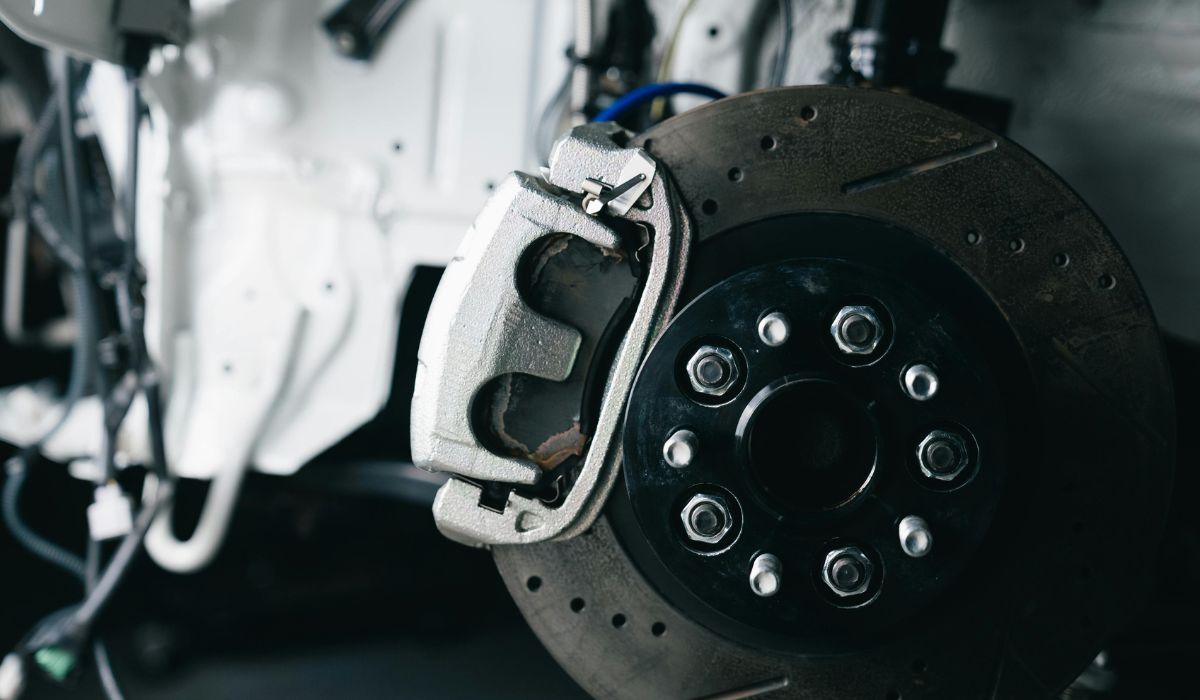
Why Florida Is Harder on Brakes Than Most States
The 30,000-to-70,000-mile range was not built around coastal Florida driving. It assumes a temperate climate with mixed highway and city use. Sarasota drivers face a different reality.
Salt air from the Gulf accelerates rotor corrosion. Surface rust forms faster here than in inland climates, and while light rust burns off during normal braking, heavier corrosion pits the rotor surface over time. Pitted rotors wear pads unevenly and reduce stopping power before any driver notices a symptom.
Humidity compounds this. Brake components that sit overnight in a high-humidity environment develop surface oxidation faster than in dry climates. In a vehicle that sits for several days — a second car, a seasonal vehicle, or even a daily driver parked over a long weekend — this process is accelerated.
Then there is traffic. US-41, Stickney Point Road, and the causeway approach to Siesta Key involve repeated stop-and-go patterns that put far more thermal stress on pads and rotors than steady highway driving. Each hard stop generates heat. Repeated short stops in traffic prevent the system from cooling fully between applications.
In practical terms, Sarasota drivers should expect real-world brake pad life closer to the lower end of the range, and in some cases below it. A more useful local benchmark: inspect your brakes every 12 months or 12,000 miles, whichever comes first.
Warning Signs by Severity: What to Do and When
Not every brake symptom demands the same urgency. Here is how to read what your vehicle is telling you.
| Symptom | What It Likely Means | Action Timeline |
|---|---|---|
| High-pitched squeal when braking | Wear indicator touching rotor — pads approaching end of life | Schedule within 1–2 weeks |
| Grinding or metal-on-metal sound | Pads fully worn — rotor damage is likely occurring | Same-day or next-day service |
| Pedal pulsation or vibration | Warped or unevenly worn rotors | Inspect within the week |
| Pulling to one side when braking | Uneven pad wear or a seized caliper | Inspect promptly — safety concern |
| Soft or spongy pedal feel | Air in brake lines or fluid moisture contamination | Do not drive — have vehicle inspected immediately |
The squeal is the early warning. It is the system doing exactly what it was designed to do — alerting you before pads reach critical thickness. Drivers who act on that squeal typically face a straightforward pad replacement. Drivers who wait until they hear grinding are often looking at rotor replacement as well.
The Hidden Cost of Waiting: A Real-World Comparison
This is where deferred brake maintenance becomes expensive in a very direct way.
A routine brake pad replacement, caught at the squeal stage or during a scheduled inspection, is a manageable service. The job is straightforward, parts are widely available, and most vehicles are back on the road the same day.
When a driver ignores the squeal and waits until grinding begins, the rotors are almost always damaged. Metal-on-metal contact scores and gouges the rotor surface. At that point, the rotor cannot simply be resurfaced — it needs to be replaced. If a caliper has been sticking due to corrosion (which is common in Florida’s salt-air environment), that adds to the repair scope as well.
The cost difference between acting early and waiting is significant. Addressing pads alone versus replacing pads, rotors, and potentially a caliper is not a marginal difference — it is often two to three times the repair cost. The brake fluid should also be considered. Brake fluid absorbs moisture over time, which lowers its boiling point and can cause fade under hard use. Fluid that has not been changed in two or more years is worth addressing during any brake service.
For a full overview of what a brake inspection and repair covers, visit our brake repair services page. It walks through everything from pad and rotor inspection to caliper condition and fluid testing.
What a Brake Inspection Actually Tells You
A proper brake inspection goes well beyond measuring pad thickness. At Car Care Connection, our technicians check rotor thickness against manufacturer minimum specs, look for scoring and heat discoloration, test caliper function and slide pin condition, inspect brake hoses for cracking or swelling, and evaluate fluid condition.
The reason this matters: two vehicles with the same pad thickness reading can be in very different conditions depending on rotor health and caliper function. A measurement without context does not give you the full picture.
The National Highway Traffic Safety Administration identifies brake failure as a contributing factor in a significant percentage of vehicle crashes each year. Regular inspection is the most effective way to stay ahead of a system failure before it becomes a safety event.
Our complete auto repair services page covers all the systems we inspect and service, including the full brake system inspection process. And if you are due for service, check our current service coupons before you book — we regularly offer savings on brake and maintenance services.
Frequently Asked Questions
How long do brakes last in Florida?
In Florida’s coastal driving environment, brake pads typically last toward the lower end of the standard 30,000-to-70,000-mile range. Salt air, humidity, and stop-and-go traffic accelerate wear. Sarasota drivers should plan for annual brake inspections rather than relying solely on mileage-based intervals.
Is brake squeal always a sign I need new brakes?
Not always, but it usually warrants an inspection. Most brake pads have a built-in wear indicator — a small metal tab designed to contact the rotor and produce a high-pitched squeal when pads reach minimum thickness. That sound is the system telling you it is time to check. Surface rust squeal after a vehicle sits overnight typically disappears after the first few stops. Persistent squeal during braking should be inspected promptly.
How do I know if I need rotors replaced or just pads?
A professional inspection is the only reliable way to know. Symptoms like pedal pulsation, vibration through the steering wheel during braking, or visible scoring on the rotor face are indicators that rotors may be beyond resurfacing. A technician will measure rotor thickness against the manufacturer’s minimum spec and assess surface condition to make that determination accurately.
What is affordable brake service near Siesta Key?
Affordable brake service is not the same as the cheapest option available. A shop that uses quality parts, performs a complete system inspection, and stands behind its work provides far better value than a low-cost job that misses a failing caliper or skips fluid testing. At Car Care Connection, transparent estimates and thorough inspections are standard — not an add-on.
