 (941) 924-6199
 6503 Gateway Ave., Gulf Gate,
Sarasota, FL 34231
6503 Gateway Ave., Gulf Gate,
Sarasota, FL 34231


Expert Insight: 3 Warning Signs of Cooling System Failure Unique to European Cars in Florida’s Climate
TL;DR: European vehicles (like BMW, Audi, and Mercedes) have cooling systems highly vulnerable to Florida’s intense heat, humidity, and coastal conditions. We reveal three common failure signs that differ from domestic vehicles, focusing on plastic component decay, mysterious leaks, and complex electronic stress.
If you own a finely engineered European car in Sarasota, you understand that specialized care is a necessity, not a luxury. While German engineering is known worldwide for performance, the cooling systems in many European models, especially BMW, Mercedes-Benz, and Audi, were simply not designed for the sustained, brutal heat and humidity of the Florida coast.
As your local experts in European car repair Sarasota and auto repair South Sarasota, we want to share the specific warning signs we frequently see at our shop that signal a potential cooling system catastrophe.
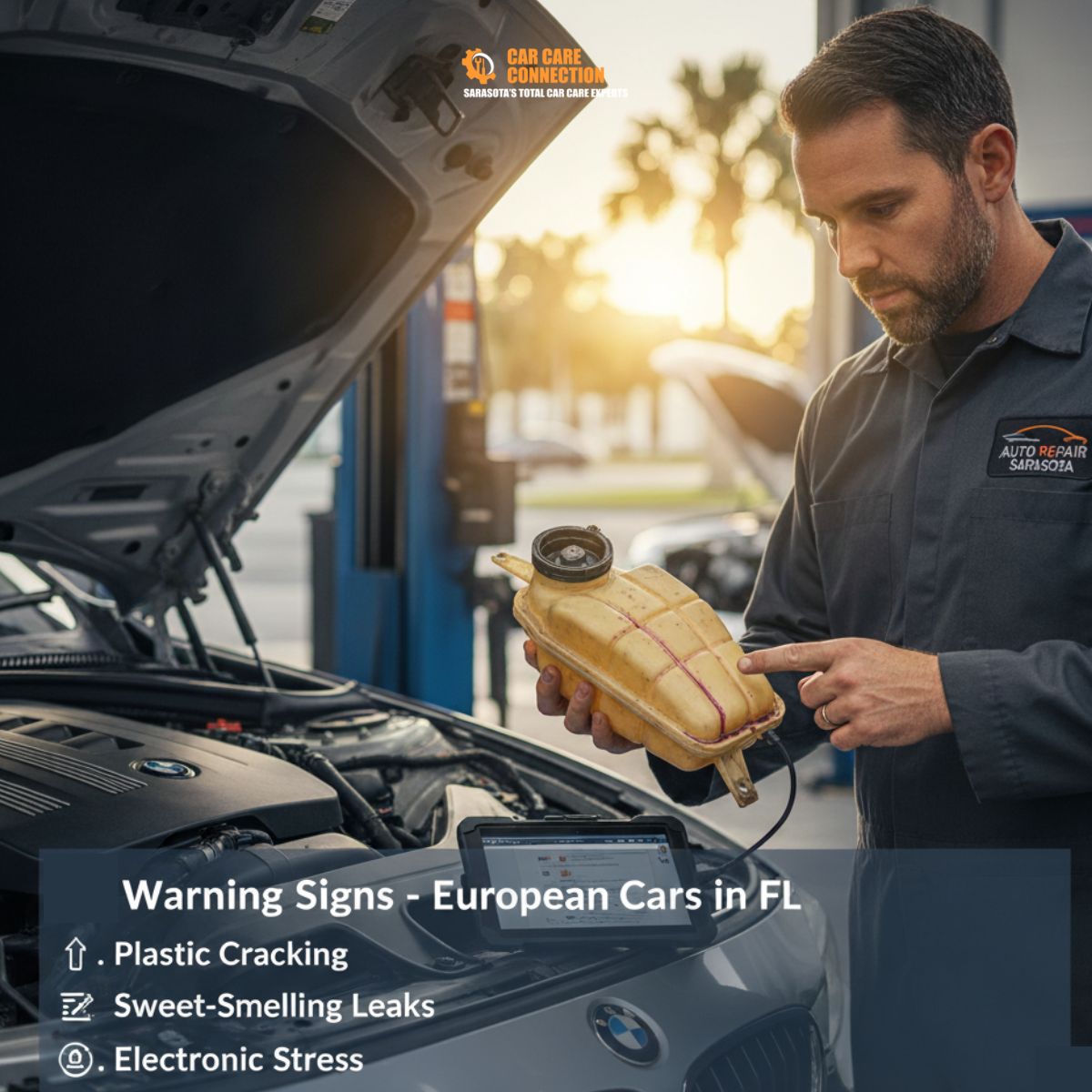
Plastic & Gasket Vulnerability: Accelerated Decay
Many popular European vehicle manufacturers heavily utilize high-grade plastic composite materials for critical cooling components, such as radiator end tanks, thermostat housings, and expansion tanks. While these save weight and cost in manufacturing, they are inherently vulnerable to the thermal stress of Florida.
How Florida’s Climate Attacks European Systems
- Heat Cycling: The constant shift between extreme engine operating temperature and ambient heat in the engine bay causes plastic components to constantly expand and contract. This process rapidly leads to brittleness and micro-fractures.
- The Component Failure: Our technicians routinely replace brittle, cracked components, including:
- Plastic water pump impellers (on some models).
- Thermostat housings that crack near the coolant hose connections.
- Radiator end caps that fail without warning.
- Gasket Hardening: Rubber gaskets and O-rings, which seal the system, become rock-hard and lose flexibility faster in high-heat environments, leading to premature leaks near the engine block.
We specifically look for “weeping” around plastic seams and gaskets on these vehicles. Catching a small crack on an expansion tank now can prevent the sudden catastrophic failure of the whole system on I-75.
The Low-Coolant Mystery: The Sweet-Smelling Leak
If you are consistently having to add coolant but never see a puddle under your car, you are experiencing the “Low-Coolant Mystery”, a common issue in European vehicles that demonstrates specialized knowledge is required for diagnosis.
Why You Can’t Spot the Leak
- Evaporation: The leaks are often slow, high-up, and occur directly onto hot engine components (like the exhaust manifold). The coolant instantly evaporates, leaving behind little to no visible trace on your driveway. The only evidence is a faint, sweet smell outside or inside the car.
- Internal Leaks: Small leaks can also develop in the oil cooler or head gasket, where the coolant slowly mixes with other fluids.
What to Avoid: Topping off with tap water. Cooling systems in European cars require specialized coolant (usually G40 or specific manufacturer formulations) that contains corrosion inhibitors and specific anti-foaming agents. Adding regular tap water dilutes these vital additives, leading to internal corrosion and further accelerated plastic decay. Always use the manufacturer-specified coolant.
Electronics vs. Heat: The Stressed Water Pump Controller
In the pursuit of efficiency, many modern European engines rely on complex electronically controlled cooling systems. This high-tech approach means cooling is dictated by sensors and computer modules, not just a simple thermostat.
The Problem of Heat and Complexity
- Electronic Water Pumps: Many BMWs, Mercedes, and Audi models use electric water pumps, controlled by a separate module. This pump is a high-cost part, and the module itself is sensitive to extreme heat.
- Persistent Heat Stress: The persistent engine bay heat, especially after a high-demand run, stresses the wiring harness, circuit board, and delicate sensors of the water pump controller.
- Failure Sign: When this electronic system fails, it doesn’t just result in a typical overheating situation. The failure is sudden and catastrophic, leading to an immediate Limp Mode or complete engine shutdown to prevent permanent damage. A generic mechanic may not have the diagnostic tools or specialized knowledge to accurately pinpoint the failure to a specific control unit.
Our auto repair shop in Sarasota is equipped with the specific European diagnostic software necessary to read the codes from these complex electronic control units. We don’t guess, we diagnose the exact electronic component failure to save you time and money.
Your European Car Deserves Specialized Care
Because European cooling systems are so vulnerable to our climate, preventative inspection and using the correct fluids are non-negotiable. Ignoring the early, subtle signs of a leak or a failing electronic pump can lead directly to engine overheating and five-figure repair bills.
If you suspect any cooling system issue, or if you simply want a high-level, specialized inspection tailored to your European vehicle’s unique needs, trust our experienced team.
Ready to protect your investment?
Book a Specialized European Vehicle Diagnostic
Click here to visit our homepage and schedule your service today.
