 (941) 924-6199
 6503 Gateway Ave., Gulf Gate,
Sarasota, FL 34231
6503 Gateway Ave., Gulf Gate,
Sarasota, FL 34231


Engine Belts and Hoses: The Age-Related Failures Florida Drivers Often Miss
TL;DR: Holiday road trips are just around the corner, but Florida’s heat may have already compromised your car’s most vital rubber components. In this guide, we explore why engine belts and hoses fail due to age rather than mileage and how to spot the warning signs before you’re stranded.
As we prepare for holiday travel, most Sarasota drivers check their oil and tires, but many overlook the “silent” components keeping their engine running: the belts and hoses. In our unique Gulf Coast environment, these rubber parts face a specific type of stress that northern vehicles simply don’t experience.
At our auto repair shop in Sarasota, we see more belt-related breakdowns in December than almost any other month, often because drivers assume that if their car hasn’t hit a high mileage mark, their belts are “fine.”
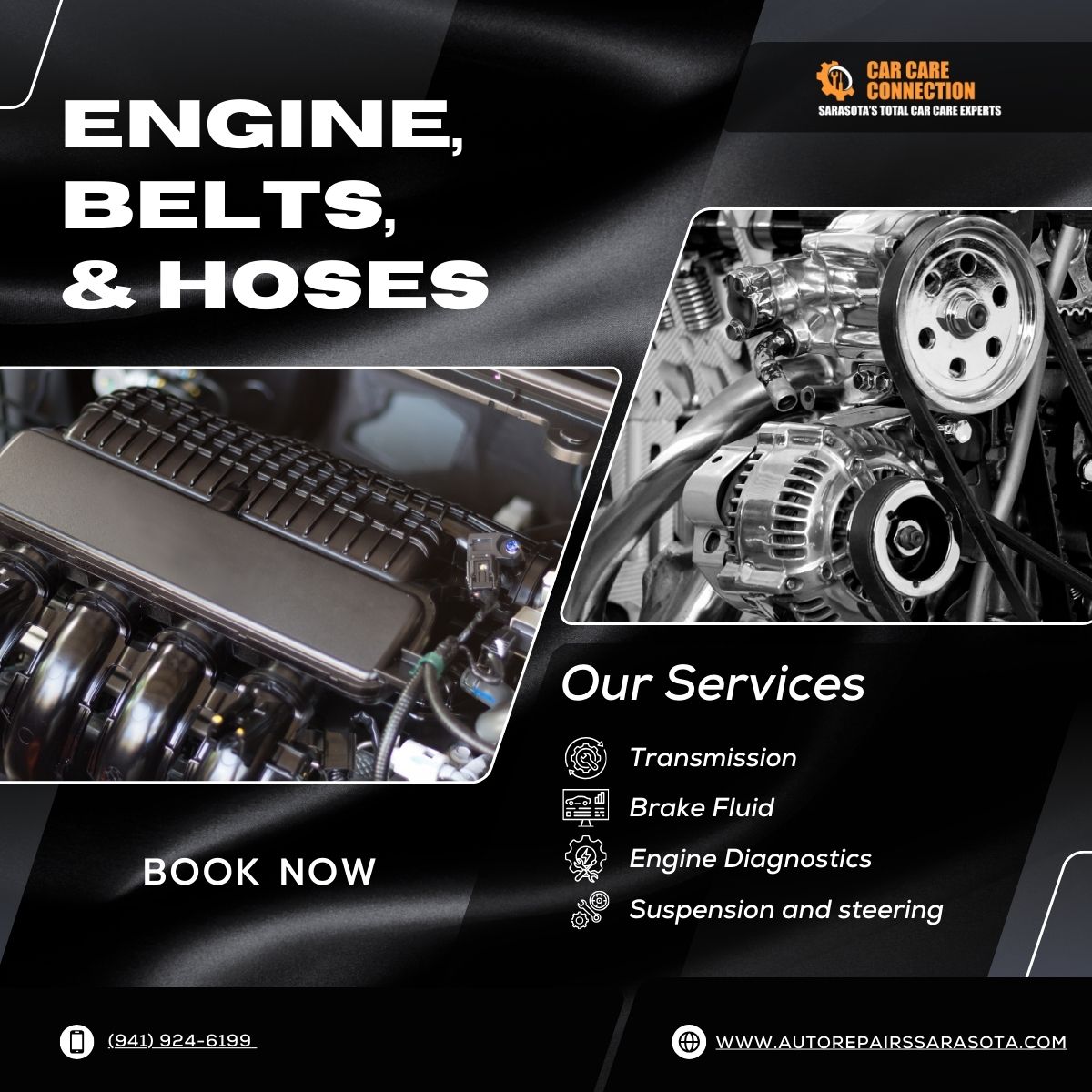
The Rubber Enemy: Why Florida Heat is a Silent Killer
In many parts of the country, mileage is the primary metric for vehicle maintenance. However, in South Florida, age and environmental exposure are far more aggressive factors.
Heat, UV, and Humidity
Rubber is an organic compound that is highly susceptible to “dry rot” when exposed to extreme thermal cycling.
- The UV Factor: Intense Florida sunlight and stagnant engine bay heat cause rubber to lose its plasticizers, the chemicals that keep it flexible.
- The Dry Rot Reality: Even if you only drive 5,000 miles a year, a five-year-old belt in Sarasota has likely become brittle. While a belt in a cooler climate might remain pliable, ours begin to develop micro-cracks that lead to sudden snapping.
Expert Tip: Don’t trust the odometer alone. If your vehicle is over 5 years old and spends time parked outdoors, your hoses and belts are at a significantly higher risk of failure, regardless of your mileage.
Serpentine Belt Snap Risk: A Step-by-Step Inspection
Your serpentine belt is the “life support” of your engine. It transfers power from the crankshaft to almost every peripheral system. If this belt snaps, you lose your A/C, alternator (battery charging), and power steering instantly.
How to Inspect Your Belt Like a Pro
If you are planning a holiday trip, follow this Step-by-Step Guide to check your belt:
- Step 1: The Visual Rib Check. Use a flashlight to look at the “ribbed” side of the belt. If you see more than three cracks in a one-inch span, the belt is nearing its end.
- Step 2: Watch for Fraying. Inspect the edges of the belt. Any loose threads or “pilling” (balls of rubber) indicate the belt is misaligned or stretching.
- Step 3: Listen for the Squeal. A chirping or squealing sound on startup is often a sign of a stretched belt or a failing tensioner.
- Step 4: Check the Hoses. Squeeze your radiator hoses (when the engine is cool!). They should feel firm but pliable. If they feel “crunchy” or excessively soft and spongy, they are rotting from the inside out.
Sudden engine failure is often preventable. Learn more about our comprehensive Engine Repair Services to keep your vehicle reliable this season.
3. Timing Belt vs. Chain: The High-Stakes Lifespan
While the serpentine belt is visible, many vehicles, especially those requiring European car repair in Sarasota, utilize a timing belt hidden behind a cover.
Why the Manufacturer Guidelines Matter
The timing belt synchronizes the movement of your engine’s valves and pistons. In “interference engines” (common in many European and modern domestic cars), if the timing belt snaps, the pistons will strike the valves.
- The Catastrophic Risk: A snapped timing belt doesn’t just leave you stranded; it can instantly destroy your engine, resulting in a repair bill that often exceeds the value of the car.
- Maintenance Schedules: Most manufacturers recommend replacement between 60,000 and 100,000 miles. However, because of our auto repair in South Sarasota experience with heat-related wear, we suggest an inspection every 60,000 miles to be safe.
In summary: The cost of a preventative belt replacement is a fraction of the cost of a catastrophic engine rebuild. Prevention is the only way to ensure your holiday travels don’t end on the side of the highway.
Don’t Let a $100 Part Ruin Your Holiday
Before you load up the car for a long trip, let our certified technicians provide a professional assessment. We specialize in everything from domestic auto repair to high-performance engine tuning services.
We’ll check your tensioners, pulleys, hoses, and belts to ensure you have a worry-free journey.
Ready for a Stress-Free Road Trip?
Schedule a Belt and Hose Inspection Today.
Check out our Current Coupons for seasonal maintenance specials!
